The market for everyday jewellery has expanded considerably in recent years, with options ranging from stainless steel and gold-plated alloys to 925 sterling silver.
With so much variety, choosing an elegant piece is about more than personal taste: the materials it is made from, how well they withstand wear and how they interact with your skin all matter. Understanding these factors makes it easier to build a collection of pieces suited to regular wear, without any unpleasant surprises.
Nickel release and plating: how EU regulations affect everyday jewellery
Jewellery worn for several hours a day in direct contact with the skin is subject to different requirements from occasional-wear pieces. The EU REACH Regulation sets different nickel-release limits depending on the type of contact: piercing posts and jewellery in prolonged contact with the skin are subject to specific limits.
For plated pieces, the issue is more complex. REACH requires jewellery with a coating to be tested for compliance after a simulated period of normal wear. A necklace or bracelet worn every day experiences more friction than a piece worn for an evening out. The plating can wear away and release nickel over time, so it is worth asking the seller for proof of compliance rather than relying on a simple “nickel-free” claim.
Clasps, chains and fastenings deserve just as much attention as the visible part of a piece. European restrictions on lead and cadmium also apply to these components. A bracelet with a clasp containing regulated metals is still a concern, even if the rest of the piece is free from them.
When looking for pieces to wear every day, it helps to browse catalogues that detail the full composition, such as those offered by Tous Les Bijoux, where you can compare materials before buying.

Everyday jewellery and body shape: choosing proportions to suit your neckline and wrist
Style guides often recommend matching jewellery to your outfit, but rarely consider body proportions. A choker has a different effect on a long, slender neck than on a shorter one. Similarly, a wide bracelet can overwhelm a slim wrist, while adding definition to a broader one.
Necklaces and necklines: a complementary approach
The principle comes down to one simple rule: the necklace length should complement the shape of the neckline. A V-neck calls for a pointed pendant that extends the line. A round neckline works better with a short necklace or choker that contrasts with the curve of the fabric. With a boat neck or bare shoulders, a long necklace adds verticality.
Earrings follow a similar principle. Long drop earrings visually lengthen a round face, while rounded hoops soften angular features. For everyday wear, studs and small hoops are the most versatile: they work from the office to dinner without needing to be changed.
Bracelets and rings: finding the right balance
One well-proportioned bracelet is better than a poorly balanced stack. For everyday wear, a slim silver or stainless-steel bracelet suits most settings. Stacking works well as long as you vary the thicknesses and stick to one dominant metal.
When it comes to rings worn all day, comfort matters more than appearance. A ring that is too tight can feel constricting in warm weather, while one that is too loose can spin and catch on things. Smooth bands without raised stones are better suited to the repetitive movements of everyday life.
Building a versatile jewellery collection: pieces that work with most outfits
Rather than buying more and more, a capsule approach can cover most occasions with a limited number of pieces. The aim is to have jewellery that works well together and suits both casual outfits and more dressed-up looks.
- A pair of understated earrings (studs or mini hoops) in a neutral metal is the most versatile foundation, working just as well at the office as it does at the weekend.
- A fine, short-to-mid-length necklace without an oversized pendant, which can easily be layered with a second necklace when the occasion calls for it.
- A fitted bracelet in stainless steel or 925 sterling silver, durable enough to withstand everyday contact with water and friction without tarnishing.
- A simple ring with a smooth or subtly textured band that won’t get in the way of typing or hands-on activities.
These four pieces work with most everyday outfits. The idea is not to own fewer pieces for the sake of minimalism, but to create a cohesive foundation that you can build on with bolder pieces for special occasions.
Care and longevity: keeping everyday jewellery looking its best
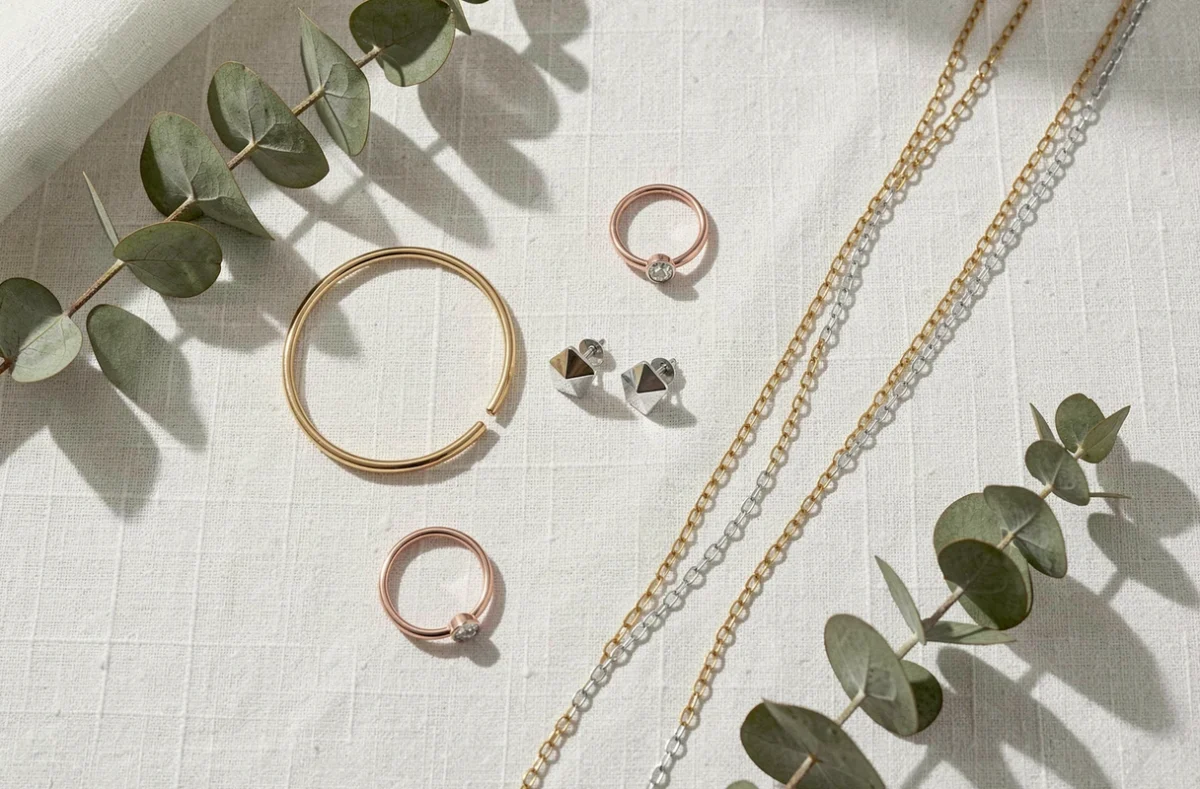
An elegant piece that tarnishes within a few weeks loses its appeal. Care depends directly on the material. Stainless steel stands up well to water and cosmetics, making it a reliable choice for everyday wear. 925 sterling silver, on the other hand, oxidises when exposed to air and sweat. In most cases, regular cleaning with a soft cloth is enough, while storing it in an airtight pouch helps prevent tarnishing.
Plated jewellery loses its coating more quickly when exposed to perfume, creams and household cleaning products. A practical rule is to put your jewellery on last, after applying all your cosmetics, and take it off first in the evening.
France’s National Repair Days highlight that jewellery repairs—such as soldering a chain, replacing a clasp or repolishing a piece—are readily available from jewellers. Repairing a quality piece often costs less than buying a new one and can extend its life by several years.
Choosing elegant everyday jewellery is less about current trends than about finding the right fit between materials, body shape and lifestyle. The best piece is one you forget you’re wearing—and miss when you take it off. That remains the best way to judge your choice.