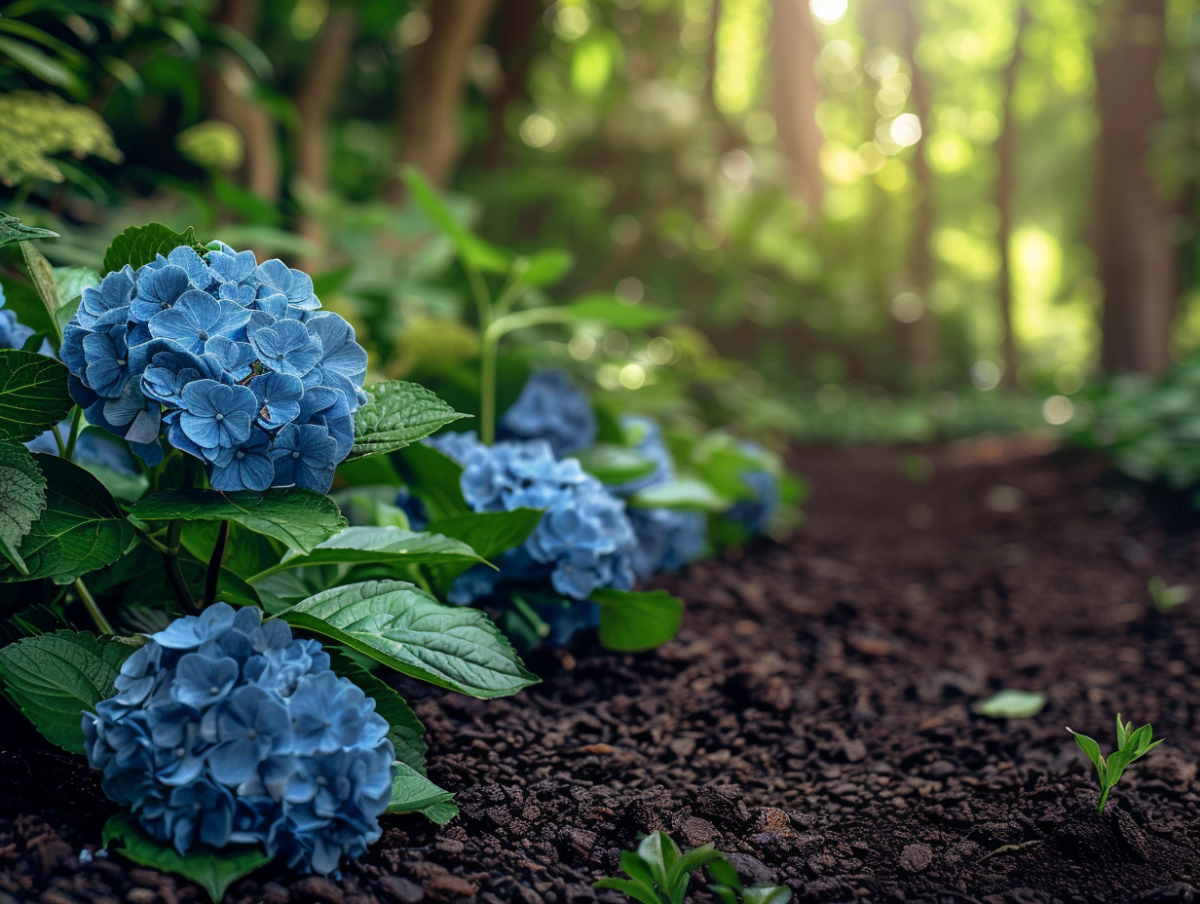
Cultivating vibrant hydrangeas requires more than just watering and proper light exposure. Mulching proves to be a fundamental element in maintaining hydration, enriching the soil, and protecting these plants from the whims of the climate. Choosing the right type of mulch can not only impact the aesthetic appearance of your garden but also the health of your hydrangeas. With a range of options available, from bark to cocoa shells, it’s easy to get lost in choices and make mistakes that could compromise the blooming of these ornamental shrubs.
Choosing the Ideal Mulch for Your Hydrangeas
In the quest for how to properly care for your hydrangeas through mulching, the priority lies in selecting materials that promote the maintenance of cool, organic-rich soil. Wood chips, hemp or flax shavings, and pine bark stand out as the best types of mulch for your hydrangeas. These organic materials decompose slowly, enriching the soil with essential nutrients while retaining moisture. The mulching strategy relies on the symbiosis between the soil and the plant, where natural mulch acts as a regulator and protector of the roots.
Hydrangeas greatly benefit from light shade, which promotes their health and blooming. In this regard, mulching is a valuable ally, as it limits evaporation and keeps the soil at an ideal temperature for these plants that prefer cooler conditions. Choosing suitable mulching materials helps ensure a controlled exposure and avoids water stress that can be induced by scorching sun or hot, sunny days.
Remember that different materials have specific properties that influence soil acidity, a fundamental parameter for hydrangeas that can suffer from chlorosis if imbalanced. Therefore, prefer materials like wood chips or pine bark, which, as they decompose, can slightly acidify the soil, creating conditions conducive to the thriving of these plants. Natural mulching also contributes to the fight against weeds and promotes beneficial microfauna, thus maintaining a favorable soil structure for the health of your hydrangeas.
Common Mistakes in Mulching Hydrangeas and How to Avoid Them
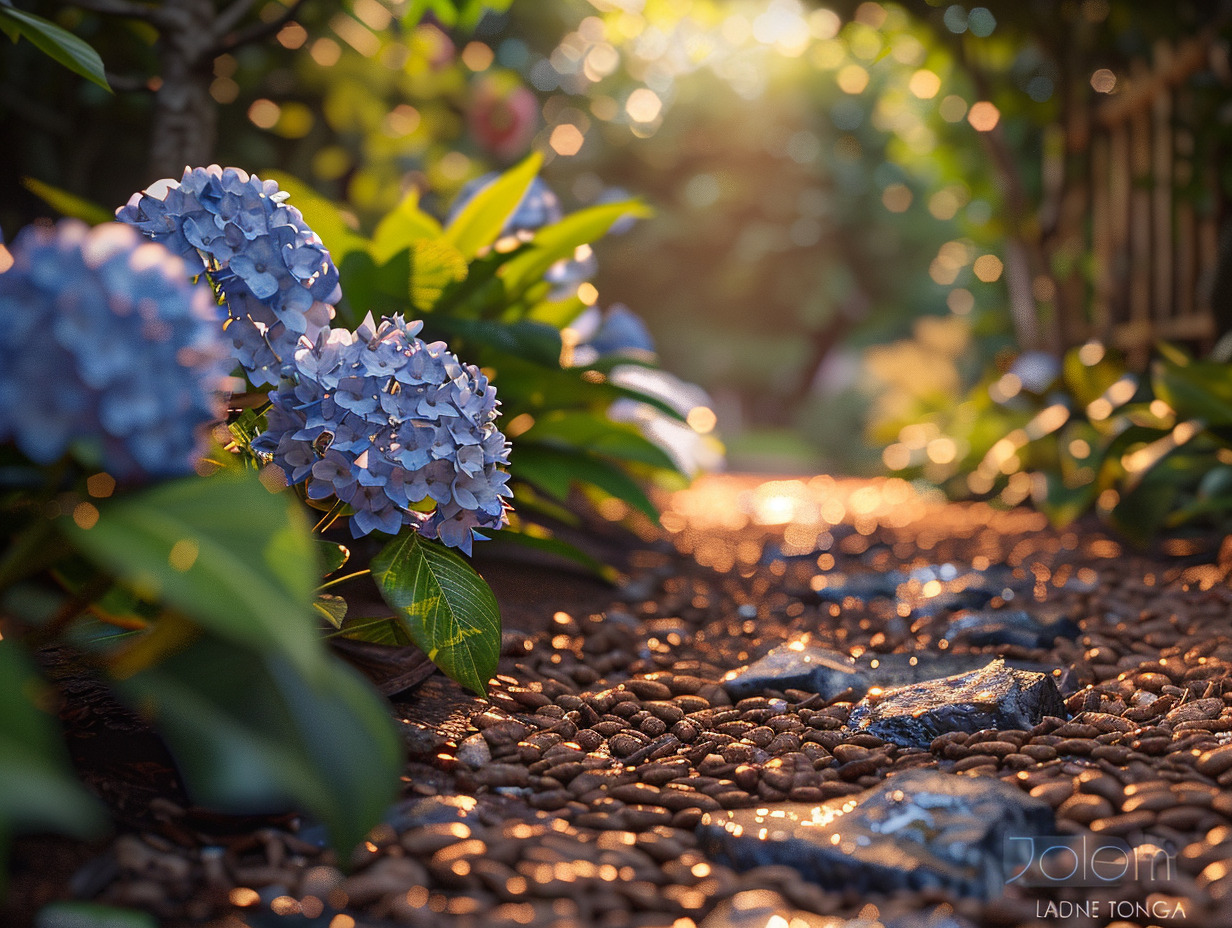
Mulching hydrangeas, if done incorrectly, can lead to counterproductive results. One common mistake lies in the use of synthetic landscape fabric, which, unlike organic materials, does not decompose to enrich the soil. These fabrics can also limit the natural exchange between the soil and air, compromising root health. Be sure to opt for organic materials that promote a beneficial microfauna and an adequate soil structure.
In winter, some gardeners tend to neglect mulching, thinking that dormant hydrangeas require less attention. However, a winter cover may not be sufficient to protect the roots from the bites of intense cold. Proper mulching is essential, even during the cold season, to ensure thermal protection and prevent diseases such as chlorosis. Therefore, maintain the vitality of your hydrangeas by keeping appropriate mulching year-round.
Pruning hydrangeas is another delicate operation, often associated with the mistake of cutting too early or too late, which can affect the blooming of the following year. Each species has its own pruning requirements, which the gardener must meticulously follow to avoid compromising their health. The proper pruning of hydrangeas, combined with effective mulching, ensures optimal growth and generous blooming.