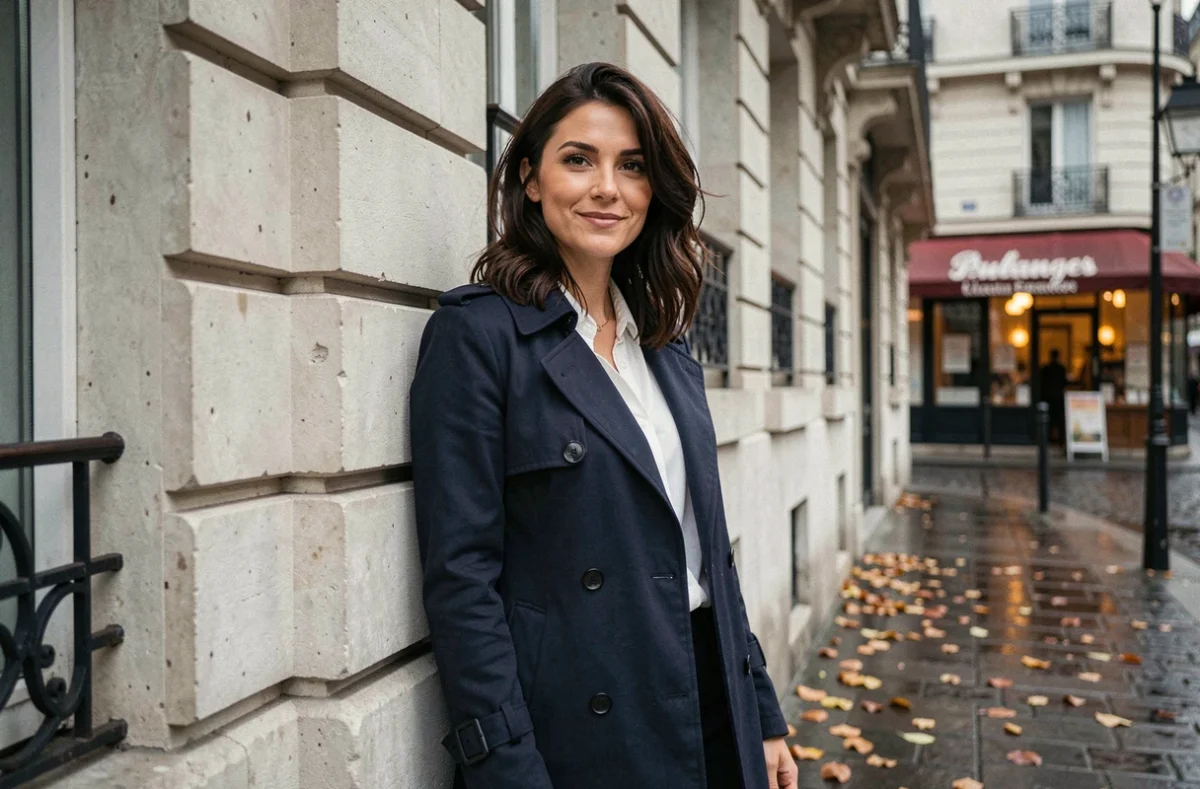
Pale complexion as a sign of nobility, red lips as a marker of vitality, and an elegant bearing valued in the arts: French aesthetic references have been built over several centuries of social, artistic, and commercial codes. These benchmarks are not fixed. In recent years, regulations have directly framed the production and dissemination of beauty standards, a turning point that alters how these criteria circulate and impose themselves.
Mandatory mention on retouched images: what the 2024 ordinance changes
French aesthetic canons are no longer transmitted solely through painting, fashion, or cinema. Social media now concentrates a massive share of the dissemination of body standards. Since ordinance n° 2024-978 of November 6, 2024, commercial influence content must indicate any modification of a face or silhouette with the mention “Retouched images,” and those produced by artificial intelligence with the mention “Virtual images.”
This provision legally makes visible the gap between published appearance and real appearance. It is no longer a cultural debate about body diversity, but a legal constraint that weighs on every sponsored publication featuring a face, skin, or silhouette.
To better understand how beauty standards in France articulate between cultural heritage and contemporary perception, one must assess how this obligation for transparency redistributes the cards among brands, content creators, and the public.
2023 Law on Aesthetic Acts: when beauty becomes a public health issue
Law n° 2023-451 of June 9, 2023, has taken an additional step. It prohibits influencers from promoting certain aesthetic acts and techniques that may pose a health risk. Injections, surgical procedures, medical devices: the promotion of these practices is now regulated by law, not just by ethics.
This law shifts the debate. We are no longer talking solely about the representation of “beauty,” but about preventing potentially dangerous body transformation practices. The legislator implicitly acknowledges that the aesthetic norm disseminated online can lead to medical interventions.
Joint liability of brands and influencers
An often underestimated aspect of this law concerns the chain of responsibility. The advertiser, their agent, the influencer, and their agent are jointly liable for damages caused to third parties in the execution of a commercial influence contract. This provision changes the game for cosmetic and aesthetic care brands established in France.
In practical terms, a brand that commissions content showcasing an unrealistic aesthetic result or a risky technique can no longer hide behind the editorial freedom of the creator. Responsibility is shared, which pushes advertisers to verify the content before publication.
- Digitally modified images must carry the mention “Retouched images” in commercial influence content.
- Visuals generated by artificial intelligence must display the mention “Virtual images.”
- The promotion of aesthetic acts that pose health risks is prohibited for influencers since June 2023.
- Even a simple gifted product can trigger obligations related to commercial influence.
French aesthetic canons: what persists beneath the regulatory surface
Regulation does not erase aesthetic preferences. It modifies their mode of circulation. The model of beauty known as “à la française” continues to rely on a few constants: discreet makeup, well-groomed skin, an appearance that suggests more than it asserts. The worked natural look remains the most identifiable signature, in contrast to more expressive aesthetic traditions in other countries.
The diversity of body types is valued more here than in Japan or Brazil, according to available cultural comparisons. A slightly aquiline nose, for example, can be seen as a distinctive feature in France, while it might be considered less desirable elsewhere.
The role of French brands in disseminating standards
Major French cosmetic houses have historically contributed to establishing the codes. Skincare, perfume, lipstick: these products are not neutral. They convey a vision of the face and body that is massively exported, giving these standards a reach well beyond its borders.
The ambassadors chosen by these brands reflect ongoing changes. The inclusion of models over forty, unretouched skin, or natural hair is increasing, although one cannot speak of a complete reversal of the old criteria. Field feedback varies on this point: some campaigns display real diversity, while others reproduce classic patterns under a veneer of inclusivity.
Men’s beauty in France: a long-ignored angle
Men’s beauty standards have long been absent from the French public debate. The men’s grooming market has seen marked growth in recent years, driven by social media and evolving representations. The male face is now an area of conscious cosmetic investment.
The standards remain less codified than for women. A well-groomed beard, clear skin, and a fit body without apparent excess are recurring benchmarks in French media. However, the aesthetic pressure exerted on men through sponsored content now falls under the same legal regime as that targeting women, which represents a notable evolution.
The perception of beauty in France is now played out on two simultaneous levels. On one side, cultural preferences inherited from several centuries of artistic and social traditions. On the other, a legal framework that for the first time imposes transparency on the very production of these images.
The available data does not allow us to conclude that one of these two levels is prevailing over the other. What is certain is that the French aesthetic norm is no longer just a cultural fact, but also a legal object.