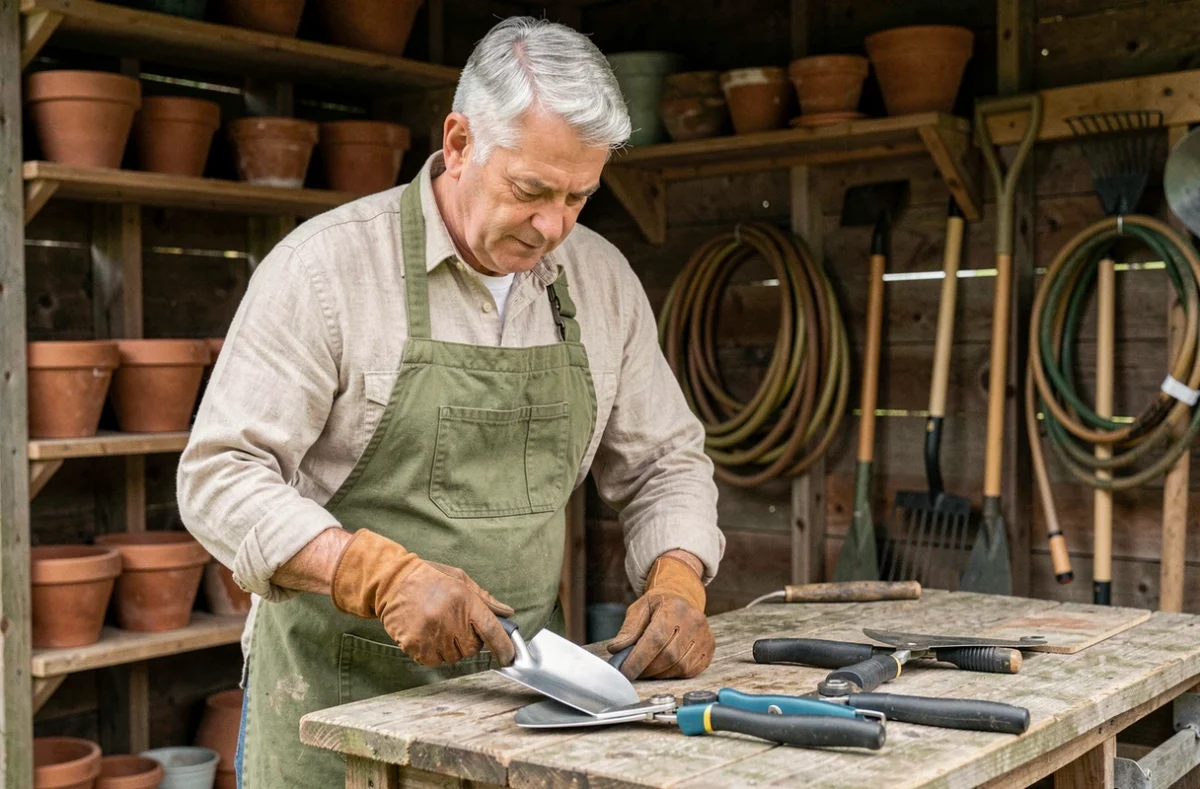
A gardening tool is defined by three parameters: the nature of the work (digging, cutting, transporting), the type of soil or vegetation, and the morphology of the person using it. Choosing gardening equipment without considering these three criteria is like buying blindly, with the risk of ending up with equipment that is undersized or unsuitable, which will eventually be relegated to the back of a garden shed after a few uses.
Repairability and availability of spare parts: a regulatory criterion
Since 2023, certain categories of powered gardening tools are subject to requirements for the availability of spare parts for at least five years. This constraint changes the purchasing logic: a hedge trimmer or brush cutter from a manufacturer that does not guarantee access to parts for this duration poses a risk of premature obsolescence.
Before finalizing a purchase, check the announced duration of availability for batteries, blades, and filters. A manufacturer that clearly displays this information on their product sheet or website inspires more confidence than one that remains vague. This point also applies to removable batteries of cordless tools, as their replacement can represent a significant portion of the initial price.
To compare ranges and technical characteristics before heading to the store, consulting a dedicated guide on gardening equipment on Info Jardinage can save time in the pre-selection phase.
The real cost of cordless tools: beyond the displayed price

The price of a cordless gardening tool reflects only part of the investment. User feedback shows that the announced autonomy can drop significantly under intensive conditions, for example, on tall grass or wet ground. In these cases, an additional battery quickly becomes necessary.
Compatibility between tools of the same brand also deserves verification on a device-by-device basis. A blower and a mower from the same manufacturer do not always share the same battery format. The most energy-hungry equipment (brush cutter, long-blade hedge trimmer) may require capacities higher than those provided as standard.
Points to check before purchasing a cordless tool
- The capacity of the supplied battery, expressed in ampere-hours, and its actual compatibility with other tools in the range
- The full charging time, which determines the continuity of work over half a day
- The availability of a replacement battery and its price, often close to half the cost of the tool itself
- The specific warranty for the battery, which is sometimes shorter than that of the device
A simple calculation: add the price of the tool, that of an additional battery, and that of the fast charger if you need one. This total constitutes the real entry cost into a cordless range.
Materials and ergonomics of manual gardening tools
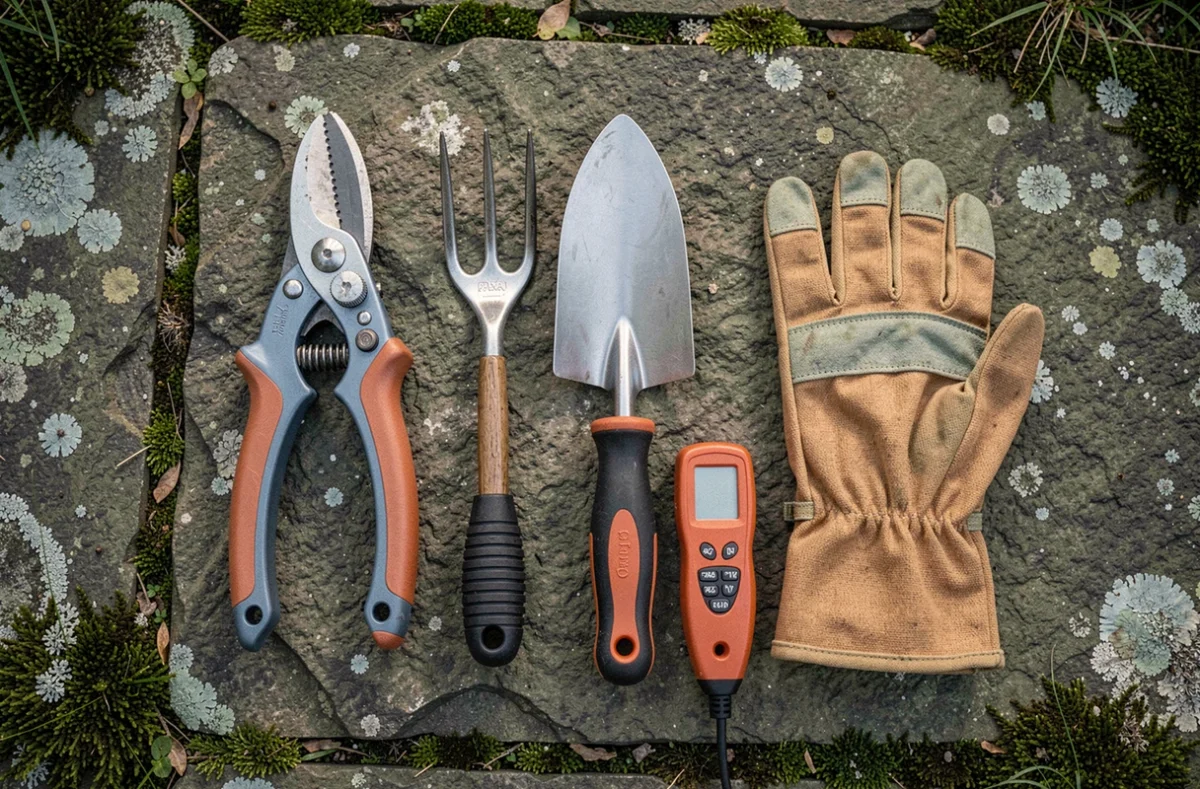
For manual tools (spade, rake, pruner, fork), the material of the head and that of the handle determine both durability and user comfort. A hardened steel head withstands wear better than standard steel, especially on clay or stony soil.
The handle, often overlooked, plays a direct role in muscle fatigue. An ash wood handle absorbs vibrations better than a resin handle but requires regular maintenance (light sanding, linseed oil). Fiberglass handles offer an interesting compromise: lightweight, shock-resistant, and maintenance-free.
Adjusting the handle length to one’s morphology
A tool with a handle that is too short forces one to bend their back, leading to lower back pain within the first hour of work. The basic rule: when standing, the handle of a spade or rake should reach between the elbow and the wrist.
Specialized manufacturers offer several handle sizes for the same tool. This option remains rare in large retail, but it makes a difference for regular use. A pruner poorly suited to the size of the hand strains the wrist and reduces cutting precision.
Noise and regulation: a often overlooked parameter
The hours of use for powered gardening tools are not set by a single national rule. Each municipality or prefecture can define its own time slots through a local decree. Adhering to the hours does not always exclude neighborhood disturbances if the noise is deemed excessive due to its duration, repetition, or intensity.
This parameter influences the choice of equipment. An electric mower or battery-powered hedge trimmer generates a noise level significantly lower than its thermal equivalent. For a modestly sized plot in a dense residential area, this noise difference can prevent conflicts with neighbors while remaining compatible with more flexible usage time slots.
Noise-related selection criteria
- Check the noise level indicated on the technical sheet, expressed in decibels (dB)
- Compare the thermal and electric versions of the same type of tool to assess the actual difference
- Consult your municipality’s decree to know the authorized time slots
The choice of durable gardening equipment relies on concrete checks: availability of spare parts, overall cost including batteries, handle adaptation to morphology, and compatibility with local noise constraints. These criteria, rarely considered together in the same purchasing reasoning, nevertheless determine the actual longevity of the equipment and the comfort of use over several seasons.