
The attraction to wild adventure reflects a deep desire to reconnect with nature, away from the tumult of daily life. Immersing oneself in the natural habitat of woodland creatures offers a unique experience, where one trades urban comfort for the authenticity of the forest. Aspiring explorers and biodiversity lovers venture to meet the animal world, learning to read the signs left by wildlife, to move discreetly, and to respect the delicate balances of these ecosystems. This return to the roots is a quest for harmony and adventure, revealing untouched landscapes and moments of wild life.
The secrets of a successful immersion in the natural habitat of woodland animals
Find your way through the thick woods and you will discover that immersing yourself in the natural habitat of woodland creatures is a delicate art that requires patience and insight. The experience of wild nature, far from the urban interstices inhabited by the wild at the heart of the city, calls for a respectful and informed approach. The adjective ‘wild’, derived from the Latin ‘silvaticus’, evokes the primal state of these spaces where the hand of man has not shaped the landscape. Consider the subtle signs left by the forest animals, such as footprints or territorial markings, as a language to decipher in order to better understand their discreet presence.
Adapt to the rhythms and habits of the creatures you wish to observe, for it is by harmonizing your presence with that of the wild fauna that you can fully experience a wild adventure. Forest bathing is not just a walk; it is an immersion that invites sensory awakening. The muted sounds of foliage, the freshness of the air, the changing palette of colors with the seasons: all these elements contribute to a deep nature immersion experience.
Respect the environment of these living beings, for the forest is their sanctuary, and our presence should be as non-intrusive as possible. The adjective ‘wild’ also refers to an element evoking the state of nature, a reminder that our exploration must be conducted in respect of this state. Urban interstices offer an escape in our cities, but wild nature requires a keen awareness of the impacts of our actions. Wild nature in the city takes shape in neglected spaces, but in the forest, it represents a fragile balance that teaches us to be attentive and responsible visitors.
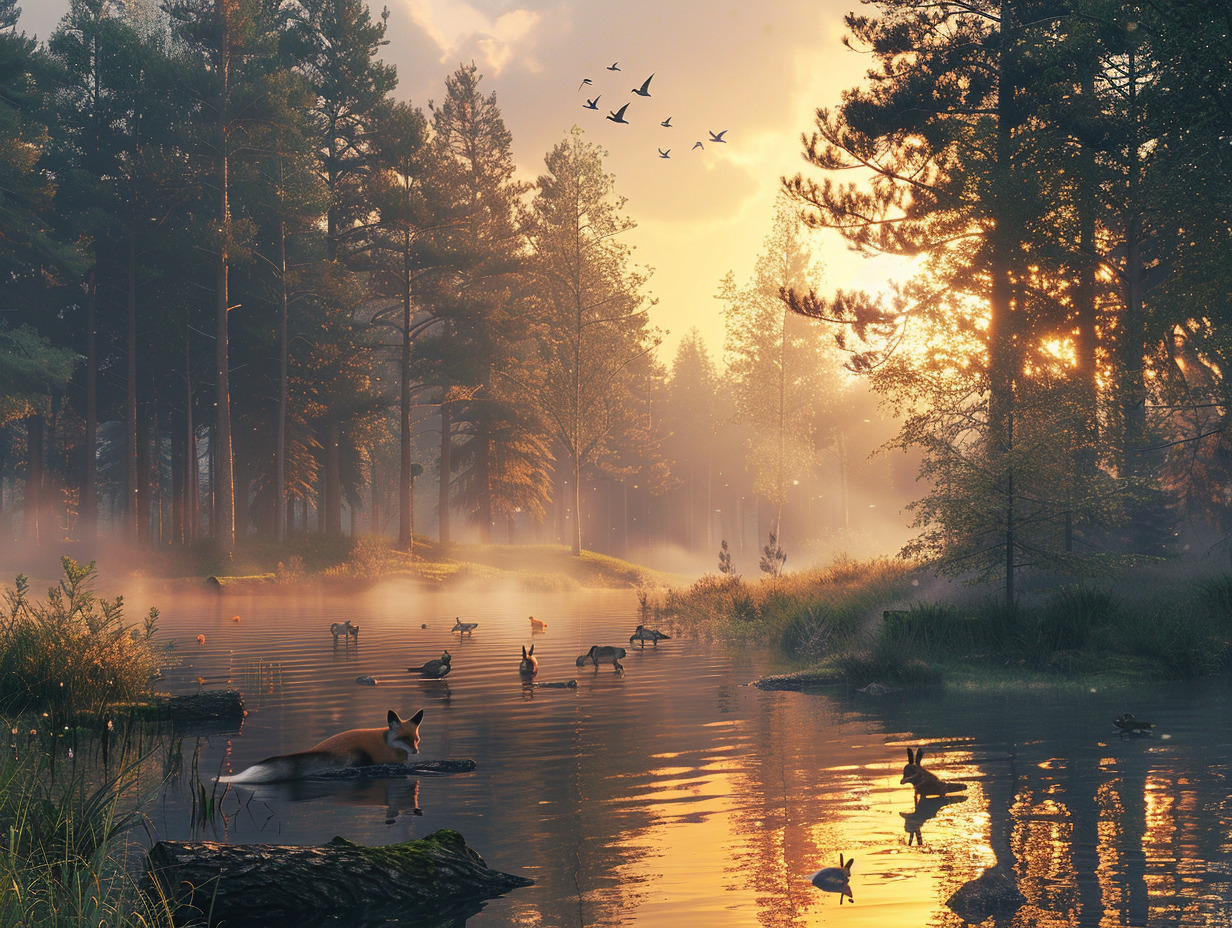
The ethical and environmental stakes of adventure in the wild
Consider natural heritage not just as a simple backdrop, but as a living entity, constantly evolving towards a rediscovery of the ordinary and a nature integrated into the urban fabric. This evolution prompts reflections on the interaction between wild spaces and the social practices that unfold within them. Urban interstices, far from being mere residues of planning, encourage innovative social practices and new forms of walks, revealing a craving for a freer and less controlled nature.
Observe how urban policies are adjusting, now integrating the wild dimension into planning strategies. The place of the wild in the city, once marginal, is asserting itself as a constitutive element of urban amenities. ‘Nature in the city’ has been institutionalized in France following the Grenelle de l’Environnement, recognizing the necessity to preserve and reintroduce elements of biodiversity at the heart of cities.
Explore the new configurations of wild life emerging in the interstices of the city, where atypical walks are taking shape. These new forms of urban wandering reflect public policies and the collective will to reclaim the natural environment. They testify to a desire to reconnect with free spaces, where nature dictates its own rules and where wild adventure in an urban setting becomes a quest for meaning and authenticity.