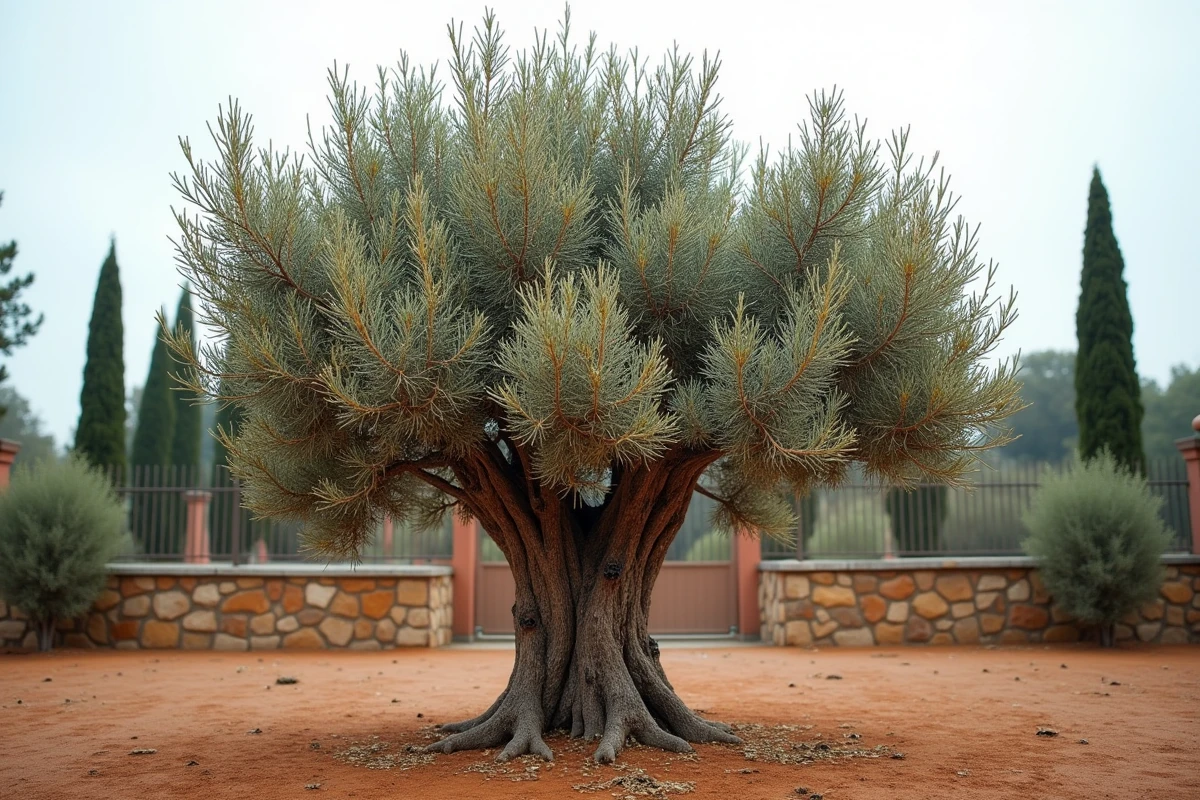
An olive tree that loses a few leaves at the end of winter is nothing to worry about. Leaf renewal is part of its cycle. The problem begins when the leaf drop accelerates, branches dry out for no apparent reason, or the foliage changes color in the middle of the growing season. Identifying a declining olive tree requires reading several simultaneous signals, not just one isolated symptom.
Olive Verticillium Wilt: Decline That Starts at the Roots
Most guides address yellowing leaves or leaf drop. However, the most insidious decline of the olive tree occurs underground. Verticillium wilt, caused by the fungus Verticillium dahliae, attacks the tree’s vascular system from the roots. The first visible symptoms—branches drying on one side of the canopy, leaves browning without falling—often appear when the infection is already advanced.
According to a technical bulletin from INRAE published in February 2026, a resurgence of verticillium wilt has been observed in olive groves in the Southeast of France since the autumn of 2025. Field reports indicate a limited success of systemic fungicides in prolonged wet conditions. Growers facing this issue report varying results depending on soil types and varieties.
Specifically, if your olive tree shows asymmetric drying (one half of the tree green, the other dead), verticillium wilt is among the top hypotheses. An examination of the roots may reveal browning of the vascular tissues. Understanding the signs that an olive tree is dying helps distinguish this pathology from simple water stress.
Yellowing or Dropping Olive Leaves: Correctly Interpreting Symptoms
Not all leaf drops are the same. The diagnosis depends on the combination of symptom location, speed of appearance, and the season.
Circular Spots on Foliage
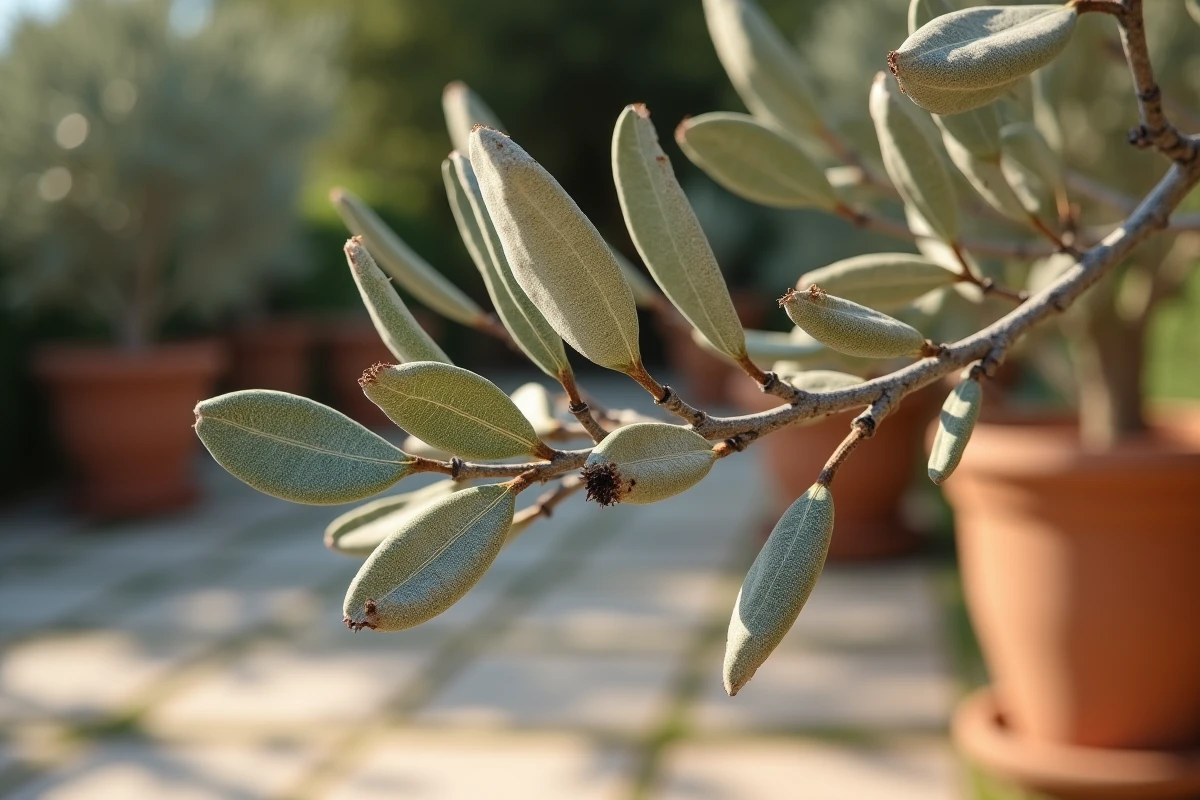
Round spots, often ringed with yellow, on the upper side of leaves indicate peacock eye (Spilocaea oleagina). This fungal disease causes premature leaf drop in spring and gradually weakens the tree. It does not directly kill the olive tree, but a defoliated tree for several consecutive years eventually declines.
Black Coating on Leaves and Branches
A blackish deposit covering the foliage without perforating it generally corresponds to sooty mold. This surface fungus develops on the honeydew produced by scale insects or aphids. The sooty mold itself does not attack the tissues, but it blocks photosynthesis. Treating pests upstream eliminates the cause of sooty mold.
Generalized Yellowing Without Spots
Uniform pale yellowing of the foliage, without distinct spots, points more towards excess water or poorly drained soil. Asphyxiated roots can no longer transmit nutrients. In pots, this problem frequently occurs when drainage is insufficient or when the soil remains waterlogged after watering.
Bark Scratching Test and Branch Condition: Assessing Real Vitality
Leaves only tell part of the story. An olive tree can have lost all its foliage and still be alive—or retain a few green leaves while its trunk is already dead inside.
The bark scratching test remains the most reliable method for an amateur gardener. With a fingernail or the blade of a knife, gently scratch the bark of a secondary branch. Green and moist wood beneath the bark indicates that the branch is alive. Brown, dry, and brittle wood means that this part is dead.
Proceed methodically:
- Start with the tips of the highest branches, which die first during gradual decline
- Move down to the main branches if the twigs are dry, to determine how far the dead wood extends
- Finally, scratch the base of the trunk, near the ground: if this area is still green, the tree may regrow from the stump
An olive tree with a still green trunk at the base but dry throughout the branches has undergone major stress (frost, prolonged drought, disease). Shoots may appear at the base in the following months.
Olive Fly and Pests: Growing Threats
The decline of an olive tree is not always related to soil or climate. Pests play an increasing role, particularly the olive fly (Bactrocera oleae). A report from EFSA published in March 2025 indicates a rising trend of attacks in Southern Europe, with prolonged seasonality linked to climate change. Predictive models anticipate longer periods of activity in the coming years.
For gardeners, the olive fly is mainly detected on the fruits (small oviposition holes, galleries in the pulp). However, severe and repeated infestations weaken the tree over the seasons. Meanwhile, the gradual ban on neonicotinoids for olives in France since January 2025 is pushing towards biological alternatives like pheromone traps, whose effectiveness varies by context.
Another pest to watch for: the black scale of the olive tree. Its presence is detected on the underside of leaves as small brown shells. It weakens the tree by sucking sap and promotes the appearance of the sooty mold mentioned earlier.
Soil, Drainage, and Watering: Errors That Accelerate Decline
An olive tree tolerates drought better than most fruit trees. However, it does not tolerate excess stagnant water at the roots very well. In open ground, clay soil without natural drainage poses a major risk factor. In pots, insufficient drainage holes or overly compact substrate produce the same effect.
Signs of a root problem related to water appear gradually:
- Soft and yellow leaves despite regular watering, indicating that the roots are no longer functioning
- Smell of sour or moldy soil at the pot level, indicating root decomposition
- Bark of the trunk peeling in patches at the base, often associated with chronic excess moisture
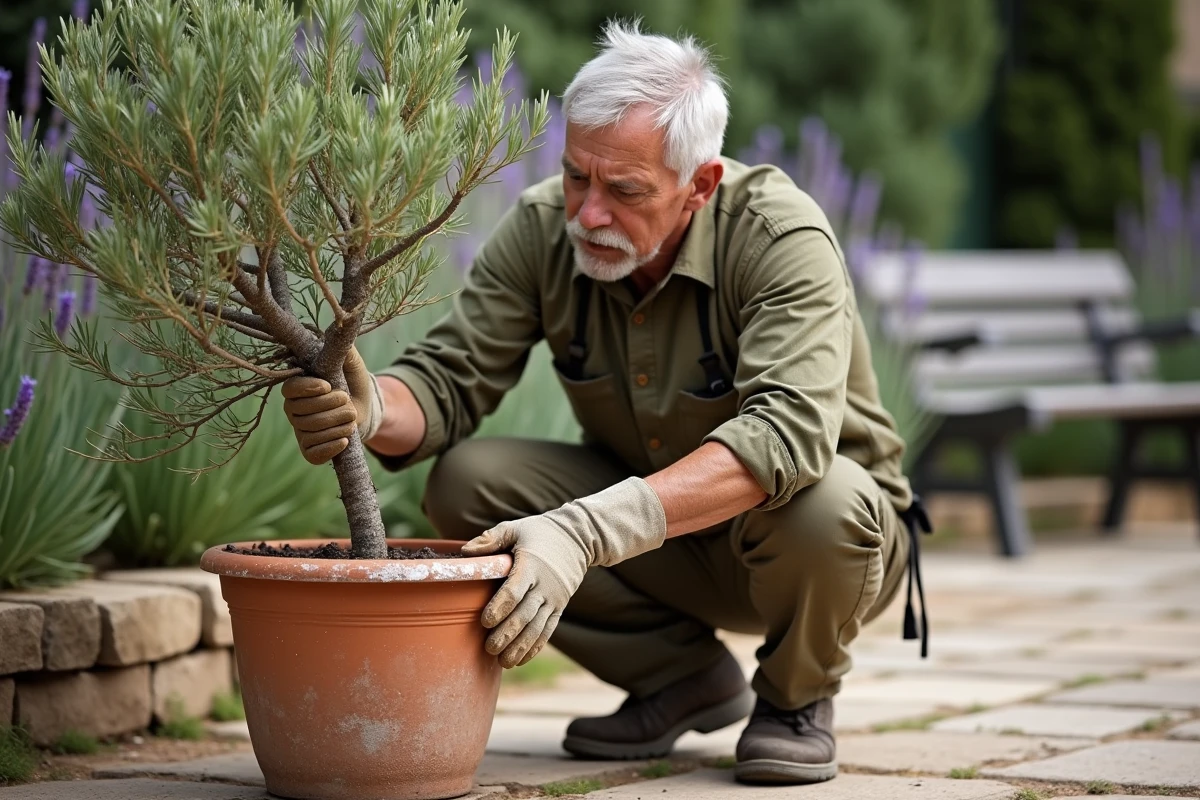
A potted olive tree requires a draining substrate, composed of a mix of potting soil, coarse sand, and gravel at the bottom of the container. Watering should occur when the soil is dry several centimeters deep. Watering an olive tree like a tropical plant remains one of the most common mistakes.
A tree weakened by poor drainage also becomes more vulnerable to the fungal diseases mentioned earlier. Verticillium wilt, for example, develops more easily in wet and compacted soils. Drainage is not just a matter of comfort for the tree; it is a sanitary barrier.